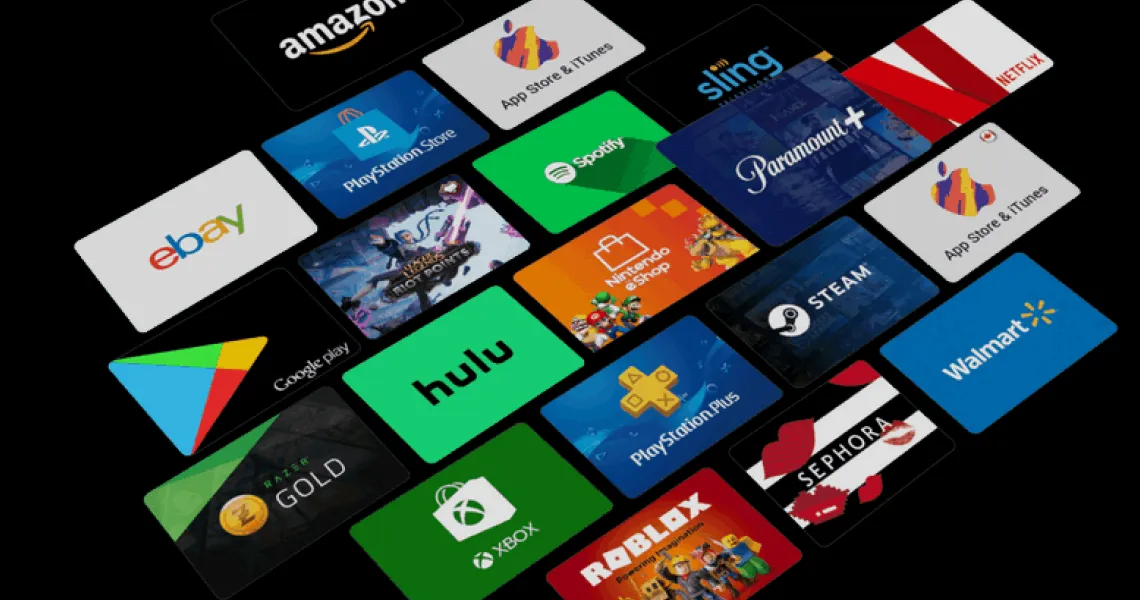
Gift cards are one of the safest, most convenient ways to give a present or top up a wallet — but the same features that make them great gifts (instant, near-anonymous, hard to reverse) also make them a favourite tool for scammers. As a digital gift card store, Virtwave takes this seriously: the best customer is a safe customer, and the more people understand how gift card scams work, the fewer of them succeed. This 2026 report pulls together the most reliable recent data on gift card fraud — how much is lost, why criminals demand gift cards, which brands they ask for, the scam scripts they use, who they target, and exactly what to do if it happens to you. Every figure is attributed, the full source list is at the bottom, and you are welcome to cite it.
Key takeaways at a glance
- US consumers reported losing about $212 million to scams paid with gift cards in 2024, according to the FTC — and because most fraud goes unreported, the true figure is far higher.
- Gift cards are consistently one of the top payment methods scammers demand, and the single most-requested method in several scam categories (government impersonation, tech support, prize and romance scams).
- Apple and Target gift cards are the brands most often named in reports; Target cards alone accounted for roughly $35 million paid to scammers — more than twice any other brand.
- The median amount lost when victims paid with a Target card was about $2,500, and nearly a third of those victims lost $5,000 or more.
- Older adults are hit hardest in dollar terms: people in their 70s reported a median loss of about $1,000, versus roughly $417 for people in their 20s, and gift cards were the payment method in about 16% of older adults’ loss reports.
- No legitimate government agency, business, bank or employer will ever require payment in gift cards — that demand is, by itself, a near-certain sign of a scam.
How much is lost to gift card scams?
The headline figure most often cited is the FTC’s: about $212 million reported lost to scams paid with gift cards in the United States in 2024. That sits inside a much larger fraud picture — the FTC put total reported US fraud losses at roughly $12.5 billion in 2024, rising to about $15.9 billion in 2025. Gift cards are only one slice of that total (bank transfers and cryptocurrency account for far larger dollar sums), but they remain one of the most frequently reported payment methods, and the go-to method for the high-volume impersonation scams that target everyday consumers. Crucially, these are reported losses only; the FTC and AARP both stress that the great majority of scam victims never file a report, so actual losses are materially higher.
| Metric | Figure | Year | Source |
|---|---|---|---|
| Reported losses to gift card / reload card scams | ~$212 million | 2024 | FTC |
| Total reported US fraud losses (all methods) | ~$12.5 billion | 2024 | FTC |
| Total reported US fraud losses (all methods) | ~$15.9 billion | 2025 | FTC |
| Share of fraud reports involving a gift card | ~1 in 4 | Recent | FTC |
| Median reported loss across gift card scams | ~$1,000+ | Recent | FTC |
| Estimated share of fraud that is ever reported | A small minority | — | FTC / BJS |
Why scammers love gift cards
Understanding why gift cards keep topping scammers’ wish lists explains almost every red flag later in this report. A gift card is, from a criminal’s point of view, close to untraceable cash: once the code is read out or photographed, the money is gone and the “transaction” is nearly impossible to reverse. That speed and finality is exactly what a scammer needs.
- Speed — funds are available the instant the code is shared, so a scammer can drain a card within minutes of the victim buying it.
- Irreversibility — unlike a card chargeback or a disputed bank transfer, a redeemed gift card balance is extremely hard to claw back.
- Anonymity — codes can be resold or laundered without the scammer ever revealing a bank account or identity.
- Availability — gift cards are on sale at virtually every supermarket, pharmacy and convenience store, so a victim can be sent to buy them immediately.
- Plausible cover — asking a panicked victim to “read the numbers on the back” feels mundane, which is why the scripts work.
Which gift cards scammers demand most
Scammers gravitate toward the biggest, most widely sold brands, because a victim can buy them almost anywhere and the codes are easy to offload. In FTC reporting, Apple cards are the most frequently named brand, followed by Target, eBay, Walmart, Amazon and Google Play. But the most-reported brand is not the same as the costliest: by dollars handed over, Target gift cards led — roughly $35 million paid to scammers, more than twice any other single brand — and Target victims also reported the highest median loss of any card, about $2,500, with nearly a third losing $5,000 or more.
| # | Brand | Why scammers pick it |
|---|---|---|
| 1 | Apple / App Store | Most-reported brand; sold everywhere, easy to resell |
| 2 | Target | Highest dollars paid to scammers (~$35M) & highest median loss (~$2,500) |
| 3 | eBay | Widely available; convertible to goods quickly |
| 4 | Walmart | Ubiquitous in-store; high face values |
| 5 | Amazon | Huge install base; spendable instantly |
| 6 | Google Play | Common in tech-support & impersonation scripts |
Target gift cards led all brands, with more than twice the dollars of the next-highest brand.
Source: US FTC Consumer Sentinel Network gift-card data (Target ≈ $35M, “more than twice any other brand”). Other-brand bar is the implied ceiling.
The scams that ask for gift cards
Gift cards show up across a remarkably consistent set of scam scripts. In FTC data, gift cards were the most-reported payment method for several of them — government impersonation, tech-support, prize/sweepstakes and romance scams in particular. The common thread is manufactured urgency: a frightening or thrilling story that pressures the victim to act before they can think or check with anyone.
| Scam type | The story | The “pay in gift cards” ask |
|---|---|---|
| Government / agency impersonation | “Your Social Security number / taxes / case is compromised.” | Pay a “fine” or “secure your funds” with gift cards |
| Business impersonation | “This is Amazon/PayPal/Microsoft — there’s a problem with your account.” | Pay a “fee” or “verify” with gift card codes |
| Tech-support scam | “Your computer is infected; we need remote access.” | Pay for “repairs” or “software” in gift cards |
| Prize / sweepstakes | “You’ve won! Just cover the taxes and fees first.” | Buy gift cards to “release” the non-existent prize |
| Romance scam | A months-long online relationship and a sudden emergency. | Send gift card codes to “help” the partner |
| Boss / family emergency | “It’s me — I’m in trouble and need cards urgently.” | Buy cards and send the codes immediately |
| Job / mystery-shopper | “Your first task: evaluate this store by buying gift cards.” | Buy cards and report the codes back |
Who gets targeted — and who loses the most
Scammers contact people of every age — younger adults actually report being targeted and losing money to fraud more often overall — but when an older adult is caught, the loss tends to be far larger. The FTC found that people in their 70s reported a median loss of about $1,000, compared with roughly $417 for people in their 20s, and that gift cards were the payment method in about 16% of older adults’ loss reports, making them a top method for that group. Total fraud losses reported by adults aged 60+ rose roughly four-fold from about $600 million in 2020 to about $2.4 billion in 2024.
Younger people report fraud more often, but older victims lose far more per incident.
Source: US FTC Consumer Sentinel Network, median reported loss by reported age.
| Group | Figure | What it means |
|---|---|---|
| Adults in their 70s | ~$1,000 median loss | Highest per-incident loss of the age bands shown |
| Adults in their 20s | ~$417 median loss | Report fraud often, but lose less per incident |
| Older adults (60+) | ~16% of loss reports paid via gift cards | Gift cards are a top method for this group |
| Older adults (60+) | ~$600M → ~$2.4B (2020→2024) | Roughly four-fold rise in total reported losses |
How scammers make contact
The first move in a gift card scam is almost always an unexpected message. Historically the phone call dominated, but FTC reporting shows a clear shift: scams that begin with a phone call have fallen sharply, while those starting with a text, email or social-media message have climbed. The channel changes; the playbook does not — a stranger reaches out, manufactures urgency, and steers you toward a gift card aisle.
- Text messages (smishing) — fake delivery, bank or account-problem alerts with a link or callback number.
- Phone calls — the classic “robocall” or live-agent impersonation, still common with older targets.
- Email — invoices, “order confirmations” and account-suspension notices designed to make you call back.
- Social media & messaging apps — romance approaches, fake giveaways and hacked-friend “emergencies”.
- Pop-ups — fake virus warnings that push a tech-support number.
The red flags: how to spot a gift card scam
Every gift card scam, no matter the story, shares the same handful of tells. If you can recognise these in the moment, you can stop almost any of them before a single card is bought.
- You are told to pay with gift cards specifically — a legitimate organisation never requires this.
- There is urgency or fear — “act now”, “your account will be closed”, “you’ll be arrested”.
- You are told to stay on the phone while you drive to a store and buy the cards.
- You are asked to read the numbers off the back, photograph the card, or send the code.
- You are told to keep it secret — “don’t tell the cashier / your family what it’s for”.
- The contact was unexpected and the “problem” can only be fixed by paying immediately.
What to do if you paid a scammer with a gift card
Act fast — the sooner you report it, the better the (slim but real) chance of recovering some funds, especially if the card hasn’t been fully drained yet. Even when recovery isn’t possible, reporting feeds the data that helps catch scammers and warns others.
- Contact the gift card company immediatelyCall the brand on the number printed on the card or its official website, tell them the card was used in a scam, and ask them to freeze or refund the balance. Keep the card and your receipt.
- Report it to the authoritiesIn the US, report to the FTC at ReportFraud.ftc.gov. Reporting is free, takes a few minutes, and feeds the data behind reports like this one. Outside the US, contact your national consumer-protection or fraud-reporting body.
- Keep every detailSave the card number, the receipt, screenshots, phone numbers and any messages. These help the card company and investigators and support any claim.
- Warn the people around youTell family — especially older relatives — what happened. Scammers often retarget people who have paid once, and awareness is the strongest defence.
Methodology & sources
This report is a meta-analysis of published fraud data. The core figures — total reported gift card losses, brand breakdowns, median losses and age data — come from the US Federal Trade Commission’s Consumer Sentinel Network, the largest public fraud-report database, supplemented by AARP and the National Conference of State Legislatures (NCSL). All figures reflect reported losses only and therefore understate true totals, since most fraud is never reported. Brand-level and scam-type figures reflect recent FTC reporting (chiefly 2023–2024) and shift year to year; we name the source and period rather than averaging them. All figures were current as of June 2026.
Primary sources used in this report:
- US Federal Trade Commission — Consumer Sentinel Network Data Book & gift-card Data Spotlight (losses, brands, median loss, age data): ftc.gov
- FTC Consumer Advice — Gift Card Scams (red flags & how to report): consumer.ftc.gov
- FTC — Report fraud (where to report a gift card scam): reportfraud.ftc.gov
- AARP — Gift card scams & older-adult fraud reporting: aarp.org
- NCSL — Gift card fraud & state legislation: ncsl.org
How to cite this report
Researchers, journalists and bloggers are welcome to reference the statistics in this report. If you use a figure, please credit Virtwave and link back to this page so your readers can trace the underlying sources. Here is a ready-made attribution line you can copy:
Source: Virtwave — “Gift Card Scam Statistics 2026” (https://virtwave.com/blog/gift-card-scam-statistics-2026)
Frequently Asked Questions
How much money is lost to gift card scams?
Which gift cards do scammers ask for most?
Why do scammers want to be paid in gift cards?
Who is most likely to lose money to a gift card scam?
What should I do if I paid a scammer with a gift card?
How do I know a gift card request is a scam?
Can I reuse these statistics on my own site?
Noor runs market research for Virtwave, tracking gift card volumes, redemption patterns and fraud trends across the 80+ countries we deliver to. She compiles our data reports from primary government sources (FTC, central banks) and the major market-research houses, and cross-checks every figure against our own transaction data before publication.